The Chobe Enclave is community land of about 1,690 km2 between Chobe National Park, the Chobe Forest Reserve and the Chobe and Linyanti rivers on the Namibian border. Its villages are Muchenje and Mabele (near Ngoma), Kavimba, Kachikau, Satau and Parakarungu, home to about 4,446 people in the 2022 census. Most are Basubiya, and Kavimba is the seat of the Basubiya royal house. The Chobe Enclave Conservation Trust manages wildlife on behalf of the villages.
Key facts
- Size: about 1,690 km2, part of the KAZA transfrontier conservation area.
- Villages: Muchenje/Mabele, Kavimba, Kachikau, Satau, Parakarungu.
- People: 4,446 in the 2022 census.
- Culture: Basubiya; the Cisiya Nkulu cultural festival is held in Kavimba, usually in September.
- Getting there: the tar road from Kasane runs through Ngoma Gate, Muchenje, Mabele and Kavimba to Kachikau (about 99 km).
What is the Chobe Enclave?
The Chobe Enclave is an area of community land, about 1,690 km2, bordered on its landward side by Chobe National Park and the Chobe Forest Reserve. On the river side it is bounded by the Chobe and Linyanti rivers, which form the border with Namibia. It is part of the Kavango Zambezi (KAZA) Transfrontier Conservation Area, which links parks across five countries.
People farm, fish and keep cattle here, alongside wildlife that moves freely between the park, the forest reserve and the floodplain.
The villages, in order along the road
The tar road from Kasane leaves the park at Ngoma and runs west through the Enclave to Kachikau, about 99 km from Kasane. Beyond Kachikau the road to Savuti turns to sand, and the villages of Satau and Parakarungu lie further west towards the Linyanti.
| Village | Population (2022 census) | Notes |
|---|---|---|
| Muchenje / Mabele | 950 (counted together) | Near the Ngoma border and Ngoma Gate |
| Kavimba | 567 | Seat of the Basubiya royal house |
| Kachikau | 1,214 | Where the tar ends and the Savuti sand begins |
| Satau | 710 | West, towards the Linyanti |
| Parakarungu | 1,005 | Furthest west, about 135 km from Kasane |
| Total | 4,446 | 4,863 in 2011 |
Basubiya culture
Most people in the Enclave are Basubiya, who call themselves Veekuhane. Their language is known to others as Sesubiya. Kavimba is the seat of the Basubiya royal house.
The Cisiya Nkulu cultural festival is held in Kavimba, usually in September. Botswana Tourism has listed it, and Botswana's Daily News reported its 17th year in 2023. It celebrates the language, traditional dress, Seperu dance, food and the mokoro, with stalls from local vendors. Dates change from year to year, so ask locally or ask us.
Traditional livelihoods are fishing on the river and floodplain, rain-fed farming, and cattle.
Community conservation: the Chobe Enclave Conservation Trust
The Chobe Enclave Conservation Trust (CECT) was set up in the early 1990s so that the villages could benefit from the wildlife they live with. It holds two community concession areas, known as CH1 and CH2.
- The trust is a 50% partner in Ngoma Safari Lodge through a joint venture. The lodge opened in July 2011.
- Botswana's Daily News reported the trust's income as P15.8 million in 2023 and P18.3 million in 2024.
- Botswana banned hunting in 2014 and lifted the ban in May 2019. Hunting quotas are again one of the trust's income sources.
Elephants and the floodplain
Elephants cross the Enclave at night, moving from the park and forest reserve to drink and feed on the Chobe floodplain. That is a thrill for visitors, but a serious problem for farmers. Research published in the journal Oryx in 2020 found elephants were behind 51 to 60% of problem-animal reports in the Muchenje, Mabele, Kavimba and Kachikau area.
- Drive slowly on the tar through the Enclave.
- Never drive at night if you can avoid it. Elephants and cattle on the road are the main hazard.
Visiting respectfully
Botswana travel guides give the same general advice, and it applies in the Enclave villages:
- Greet people, especially elders, before asking questions.
- Ask before you photograph people or homes.
- Dress modestly in the villages.
- Buy locally where you can, and drive slowly past homes, schools and livestock.
Where to stay in the Chobe Enclave
The Enclave is a stay-out option for Kasane and the park: the same wildlife, less traffic, and prices that suit a budget. Stays fall into three kinds.
| Kind of stay | Example | Notes |
|---|---|---|
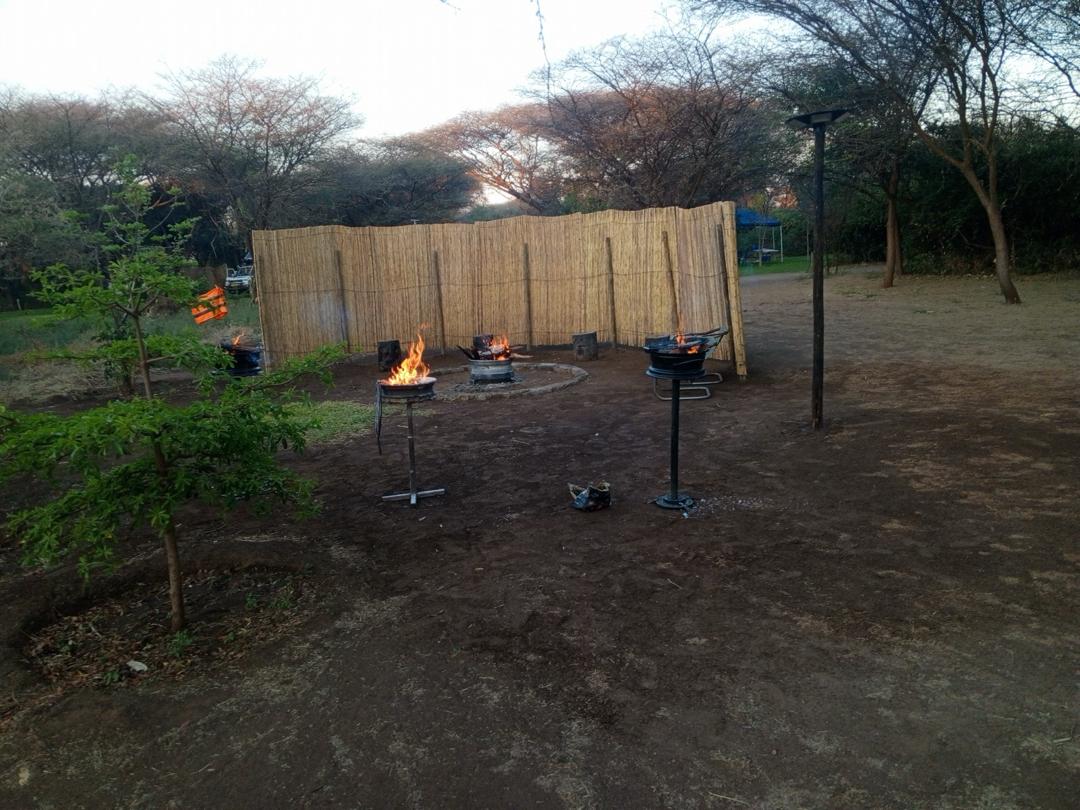
| Budget camping, hire tents | Lorato, Muchenje | The budget option in the Enclave. $20 per person per night direct, children aged 0 to 12 half price, 7 pitches with solar power points, 7 hire tents at $55 including the camping fee, check-in any time. Campsite near the Ngoma border. |
| Community lodge | Ngoma Safari Lodge | Owned in partnership with the Chobe Enclave Conservation Trust and opened in July 2011 (see above). A lodge rather than a campsite. We do not quote its rates, so check with the lodge. |
| Other small camps and cottages | Muchenje, Kavimba and Kachikau | Several small operators work in the villages. Lorato is a separate business from other Muchenje properties, so check which property you are booking. |
If you are on a budget, camp in the Enclave, drive into the park through the Ngoma Gate for the day, and avoid paying for a lodge room. See the Ngoma Gate day drive and camping near Chobe National Park, or book a campsite.
Muchenje: where Lorato is
Muchenje sits at the eastern, Ngoma end of the Enclave, on the edge of the Chobe floodplain. It is about 7 km from the Ngoma Gate of Chobe National Park, 15 minutes from the Ngoma border with Namibia, and about 60 km from Kasane on the tar transit road through the park.
Frequently asked questions
What is the Chobe Enclave?
Community land of about 1,690 km2 in northern Botswana, between Chobe National Park, the Chobe Forest Reserve and the Chobe and Linyanti rivers on the Namibian border. It has five main villages and is part of the KAZA conservation area.
Which villages are in the Chobe Enclave?
Muchenje and Mabele near Ngoma, Kavimba, Kachikau, Satau and Parakarungu. About 4,446 people lived there in the 2022 census.
Is Muchenje in the Chobe Enclave?
Yes. Muchenje is at the eastern, Ngoma end of the Enclave. The census counts it together with Mabele.
Who lives in the Chobe Enclave?
Mostly Basubiya people. Kavimba is the seat of the Basubiya royal house, and the Cisiya Nkulu cultural festival is held there, usually in September.
How far is Muchenje from Kasane?
About 60 km by the tar transit road through Chobe National Park.
Where can I stay in the Chobe Enclave?
Lorato in Muchenje is the budget option: a green grass campsite at $20 per person per night with hire tents at $55. Ngoma Safari Lodge, partly owned by the Chobe Enclave Conservation Trust, is a lodge, and other small camps work in the villages.
Are there elephants in the Chobe Enclave?
Yes. Elephants cross the Enclave at night to reach the Chobe floodplain. Drive slowly and avoid driving after dark.
More guides for your route
Sources
Checked 23 October 2026. Rules, hours and fees change, so confirm with the official source before you travel.
- Statistics Botswana: population of cities, towns and villages (2022 census)
- Koedoe (2020): Chobe Enclave study
- Ecology and Society (2023): Chobe Enclave
- Oryx (2020): elephants and farms in Chobe District
- Botswana Tourism: Cisiya Nkulu cultural festival
- Ngami Times: Cisiya Nkulu festival celebrates Subiya culture
- Ngami Times: Chobe Enclave Conservation Trust's success story
- Lawexplores: community-based tourism and the CECT
- France 24: Botswana lifts hunting ban (May 2019)
- Wikipedia: Subia people